Researcher: Alan Salnikov
Faculty Advisor: Dr. Ionut Florescu
Introduction
Property appraisals often rely on historical comparable sales, so reported values can lag changing market conditions. This project uses Airbnb data to test whether revenue estimates, guest feedback, and location information can support a more responsive approach to property valuation.
Methodology
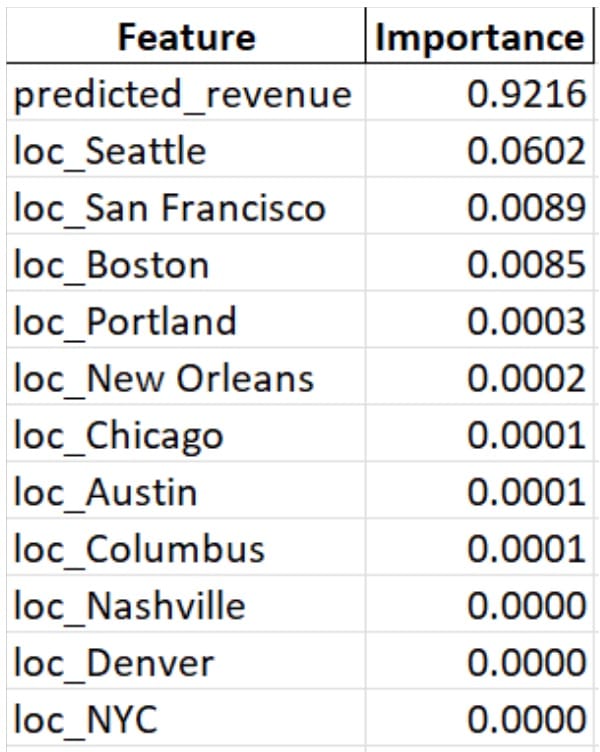
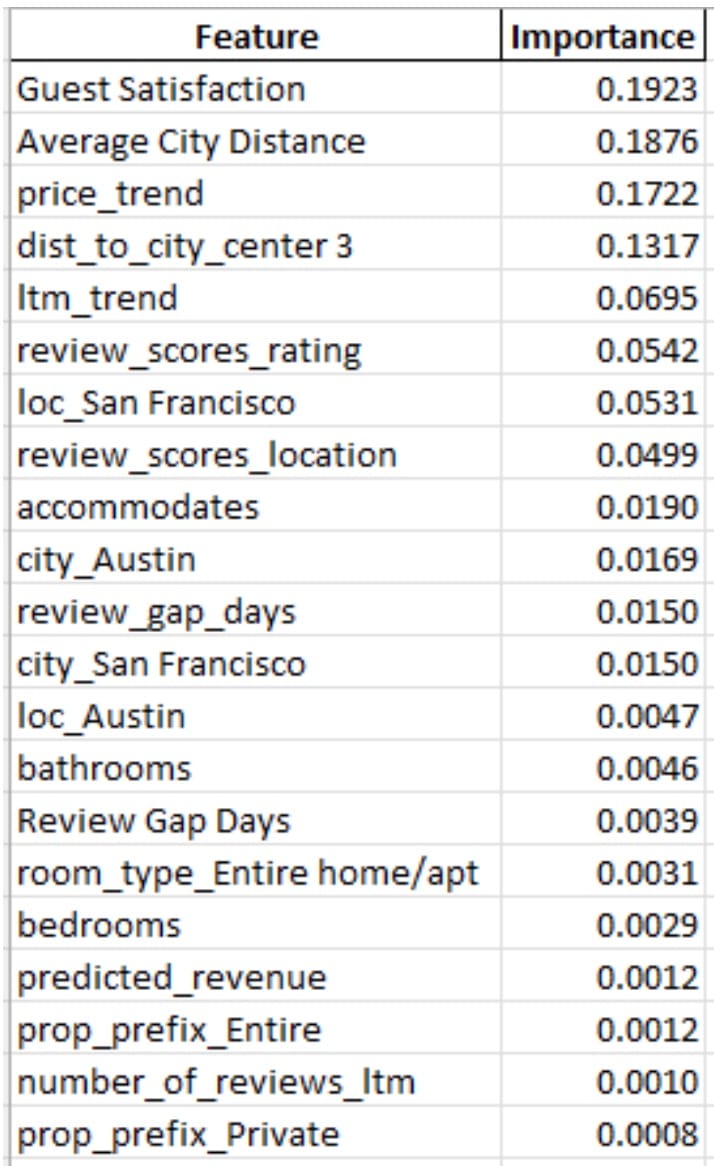
The modeling process first estimates listing revenue, then uses that estimate to predict property prices. The minimalistic model uses predicted revenue and city indicators. The full model adds listing characteristics, location measures, guest feedback, and pricing trends. The study compares these specifications with median-based and other model benchmarks.
The feature rankings show what changes when the model gets more information. In the minimalistic specification, predicted revenue accounts for about 92% of the reported feature importance. In the full specification, guest satisfaction, average city distance, and price trend are the three highest-ranked features.
Results & Analysis
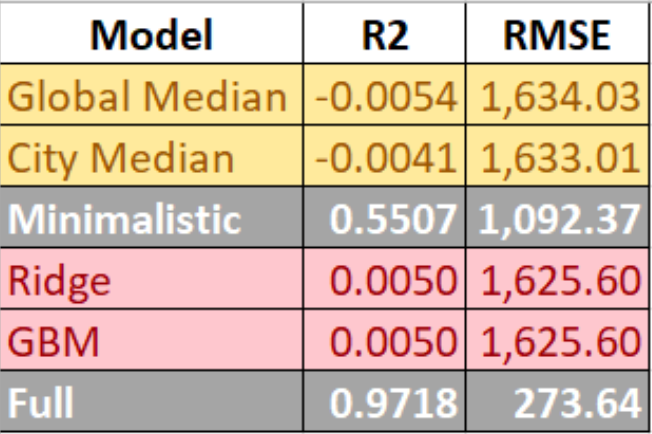
The full model substantially lowered the reported prediction error, but its residuals showed signs of overfitting. Its R² was 0.9718 and its root mean squared error (RMSE) was 273.64, compared with 0.5507 and 1,092.37 for the minimalistic model. The lower reported error shows the potential value of the richer specification. The residual analysis makes it important to test whether that advantage holds in other samples.
Conclusion
Revenue estimates and guest-facing indicators offer complementary inputs for automated appraisal. Testing the full model across different markets and time periods would help establish whether its accuracy gains hold up and whether the approach can reduce valuation lag in practice.